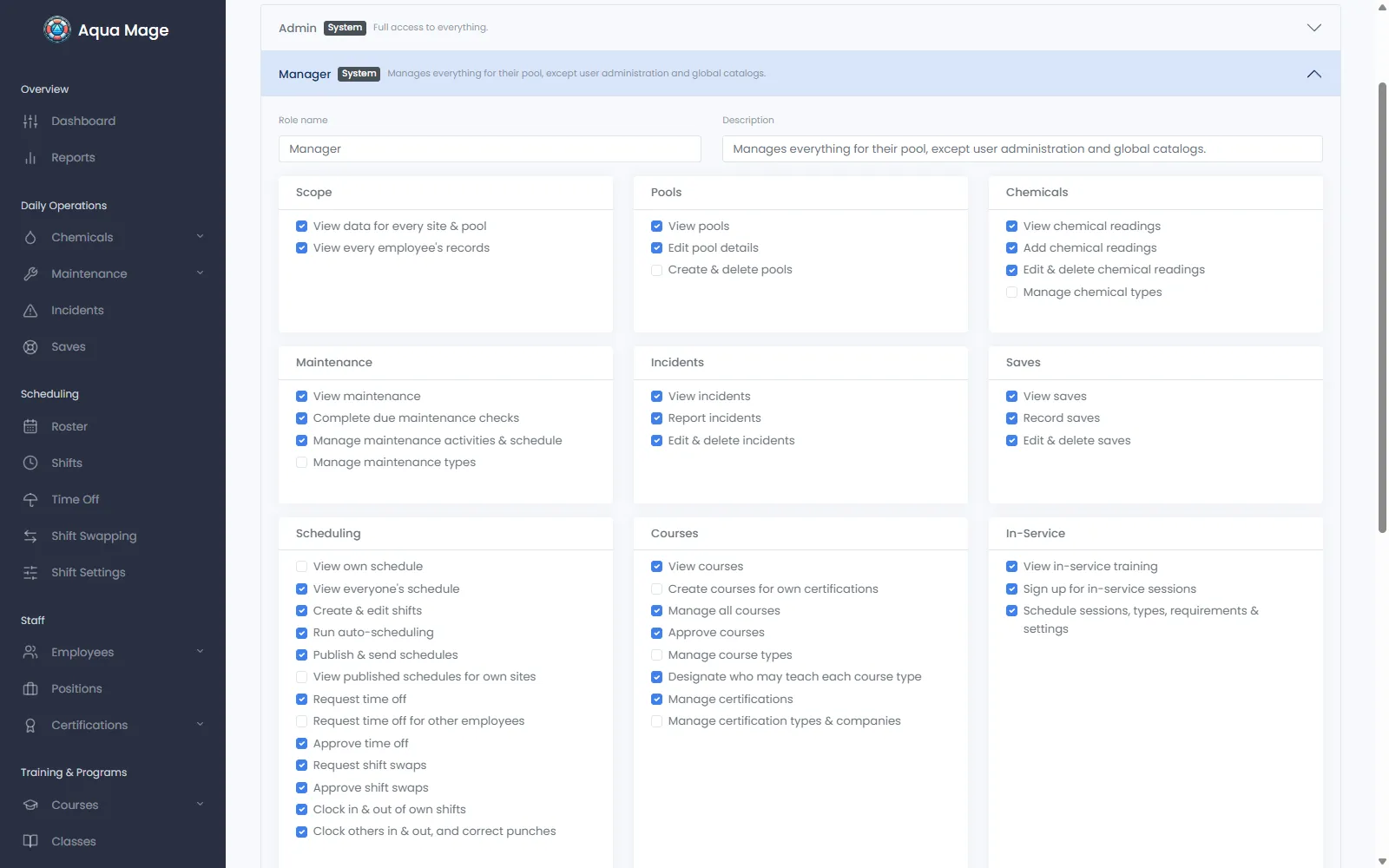
Nine areas, one account, one set of permissions. Every screenshot below
is the real product running on the demo tenant — two sites, three pools,
six staff, a month of worked-in records. Everything here works today,
and everything here is on every plan; see pricing.
Replaces the clipboard on the pump-room wall
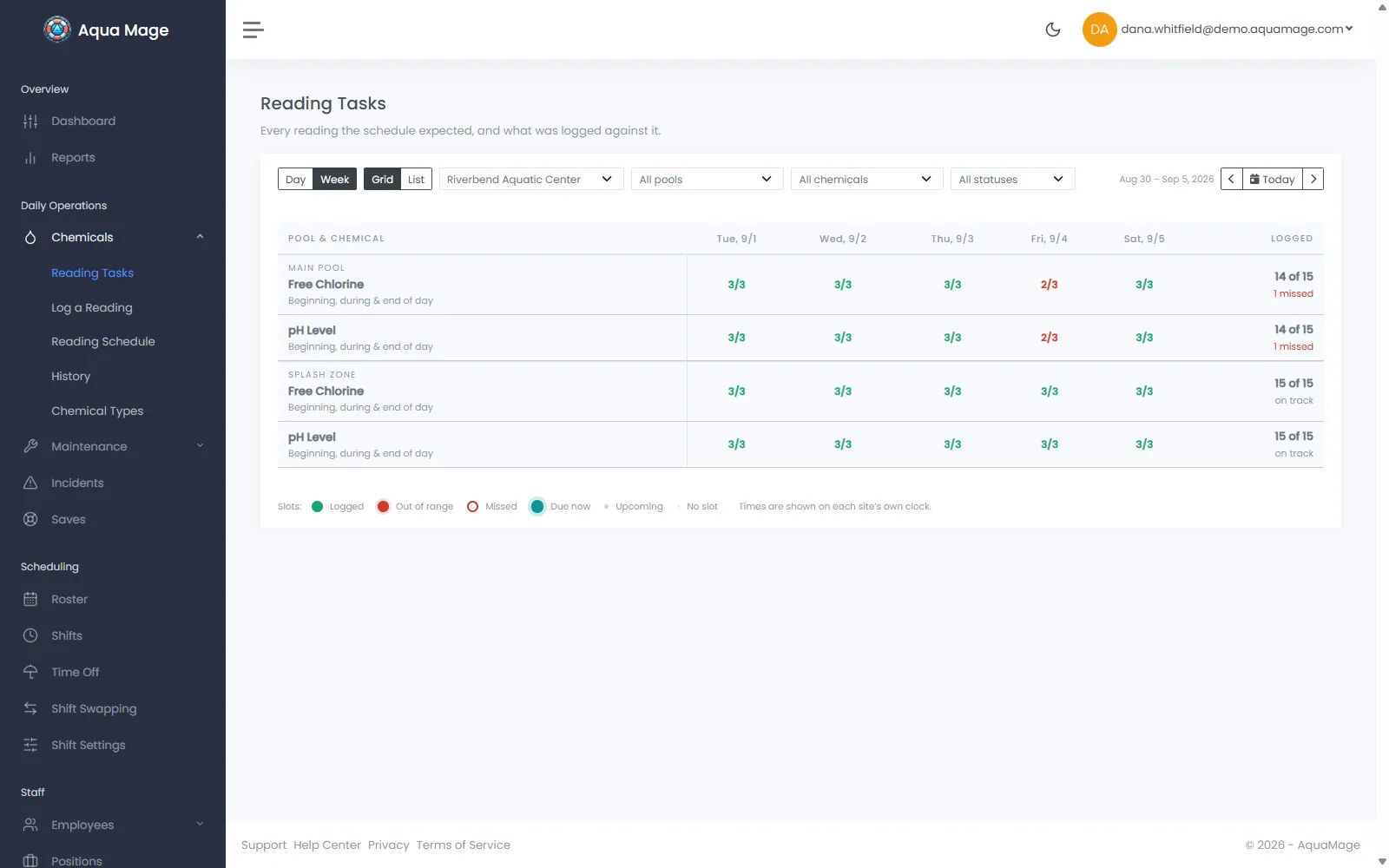
Chemical logs
A reading is a measured value, at one pool, at a recorded time, by a named employee. Set how many readings each pool owes per day and the dashboard carries a compliance percentage you can hand over without preparing anything first.
Grain
One pool, not one site. New York asks for records of each swimming pool separately, so a main pool and a wading pool keep separate logs.
Targets
Expected readings per chemical type, per pool, per day. That is what makes the compliance figure mean something rather than count rows.
Inventory
On-hand amounts with minimum stock levels and reorder dates, adjusted as shipments arrive and each change kept in history.
Alerting
A nightly check notifies once when a chemical falls below its minimum, then re-arms when stock recovers, so it cannot nag.
Retention
Twelve months stays queryable per pool and filterable by date window — not archived off where a records request cannot reach it.
Replaces the laminated checklist taped beside the pump
Maintenance and assets
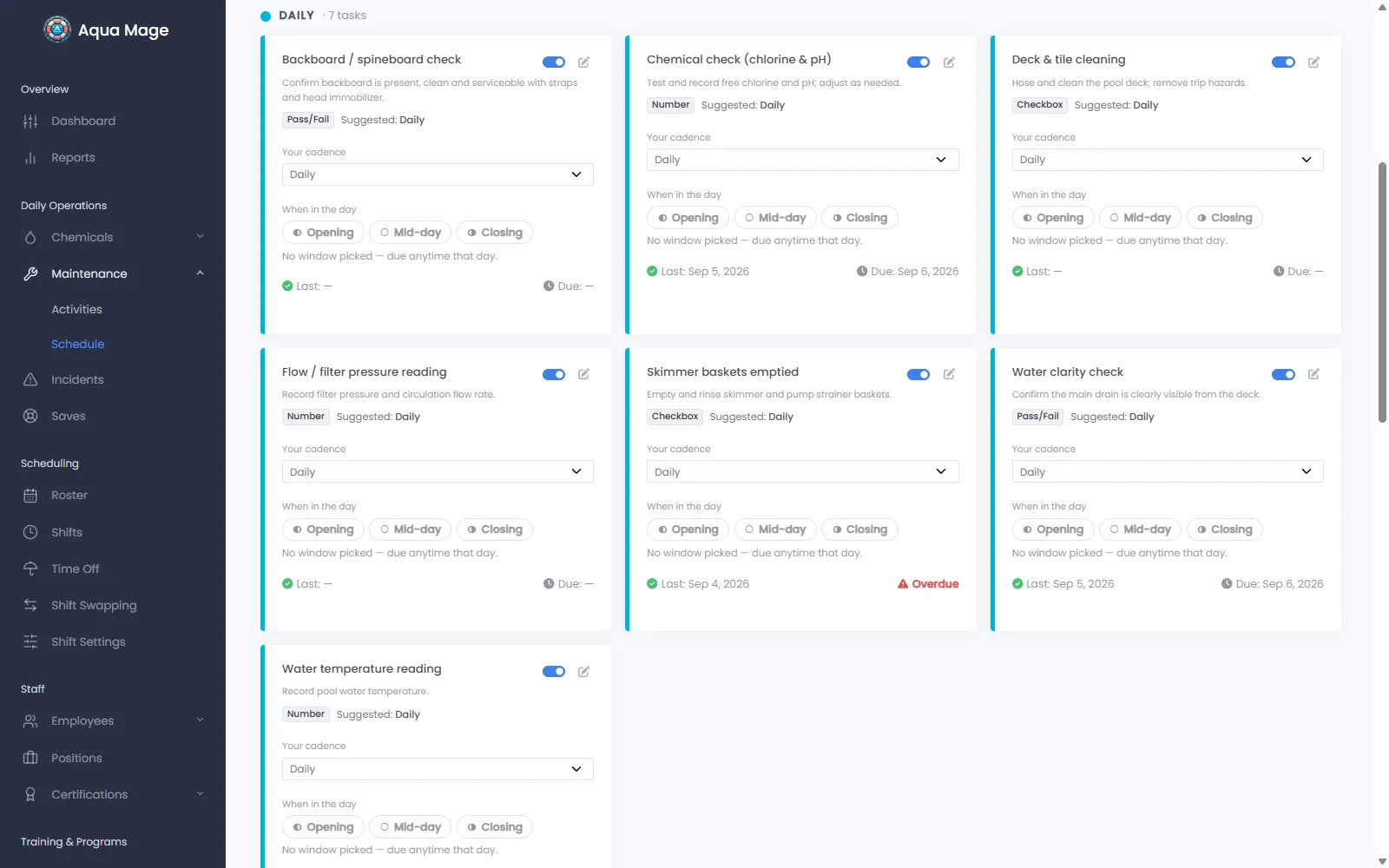
Tasks carry a cadence, and what is due is worked out from what was actually logged rather than typed in by somebody. Overdue work appears on its own, overnight, waiting to be completed.
Schedule
A shared catalogue of maintenance tasks with your own cadence on top. You can switch off a task you do not do; you cannot delete one out from under everyone.
Due dates
Last-performed and next-due are derived from logged activity, never entered by hand, so the schedule cannot quietly go stale.
Generation
A nightly job opens a pending activity for anything due or overdue that does not already have one open.
Assets
Lockers with their own type catalogue, and warranties recorded per pool.
Replaces the binder of emergency contacts nobody has opened since May
Staff management
The people, the jobs they are qualified to do, the pools they work, and when they are free. Positions are the piece that makes the scheduler's certification check possible at all.
Positions
Each declares the certification types it requires, so eligibility is data the system can check rather than something a supervisor has to remember.
Scoping
Staff see the pools they are assigned to. Assigning someone to a pool implies the site, so half-filled assignment data never hides a guard by accident.
Availability
Per-weekday windows for when someone can work, kept separately from when they are willing to be phoned.
Notifications
An email and SMS toggle per person, per kind of message. Somebody who wants texts for swaps and email for everything else can have that.
Replaces the certificate template in Word, mail-merged once a season
Courses and certificates
Run learn-to-swim and in-house training end to end — roster, pass or fail, and a certificate you laid out yourself, generated as a PDF and emailed when the course finishes.
Designer
Position the fields, the background and your logo once per course type. Everything issued from that course uses it.
Delivery
PDFs are generated server-side and emailed as attachments, for every passing student at once or one at a time.
Verification
Every certificate carries a code anyone can check at a public link without an account — a parent, an employer, an inspector. Each check is recorded.
Approval
Courses can require sign-off before they run, and an instructor may only create courses for certifications they hold themselves.
Replaces the dry-erase board rewritten every Sunday night
Shift scheduling
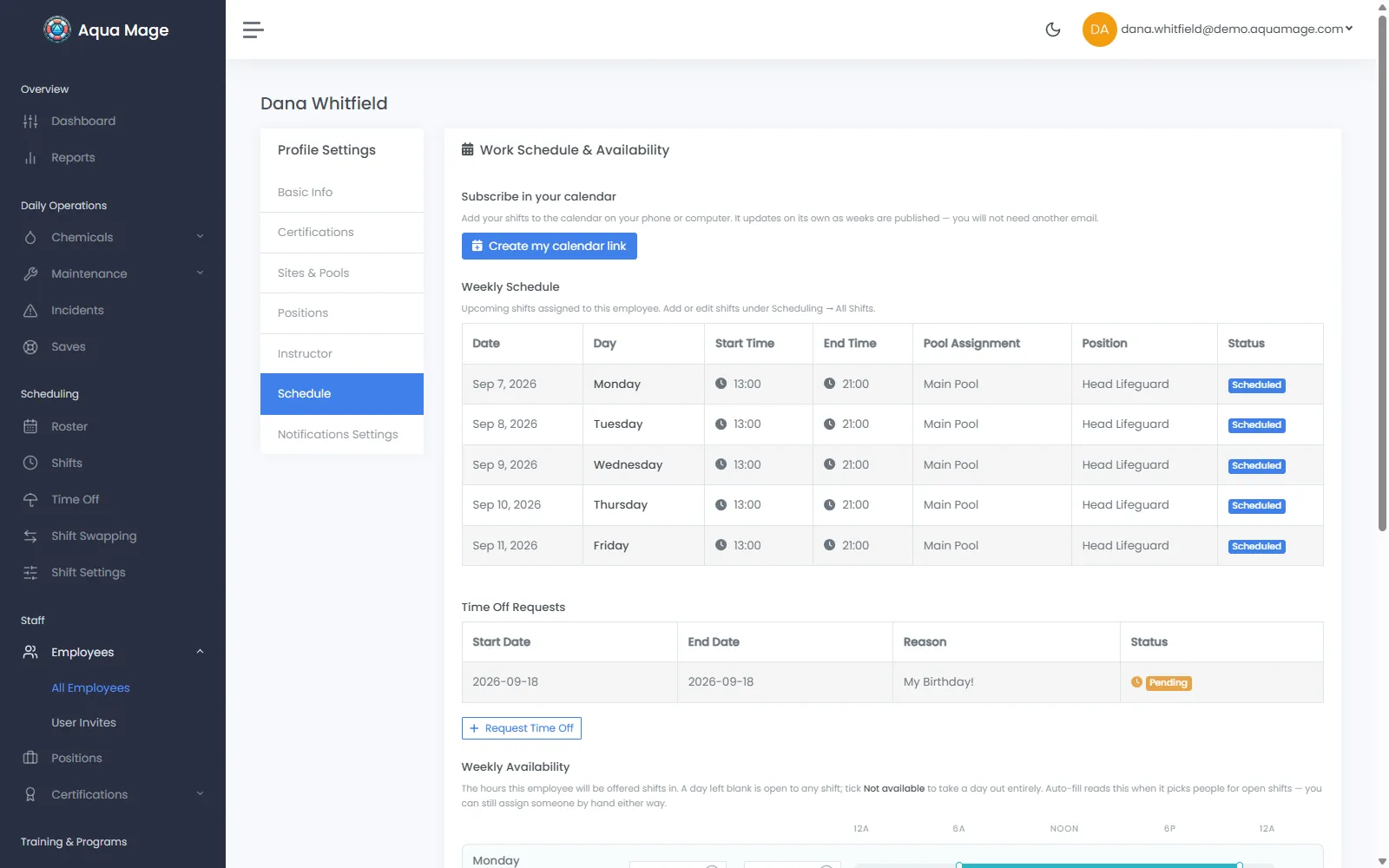
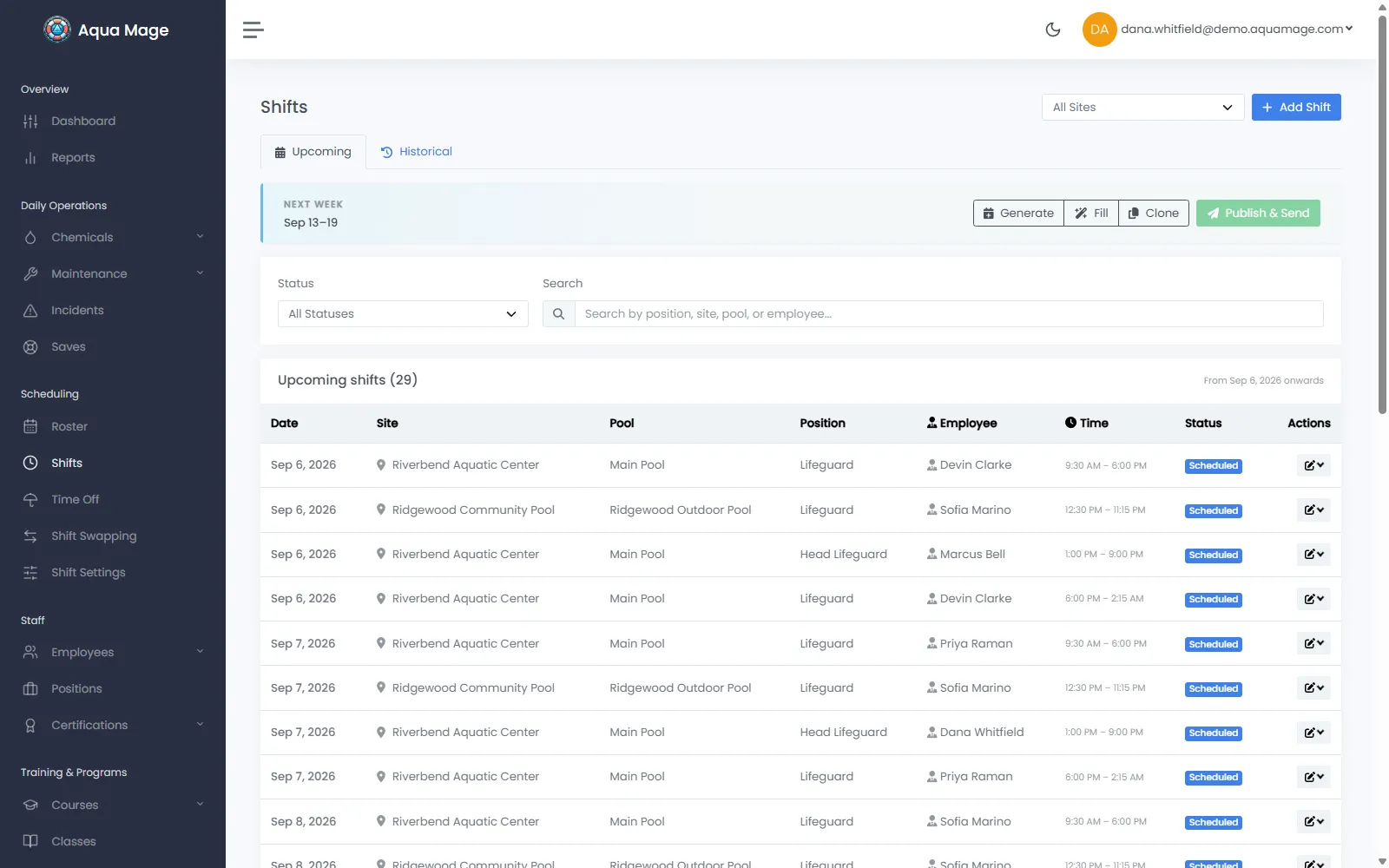
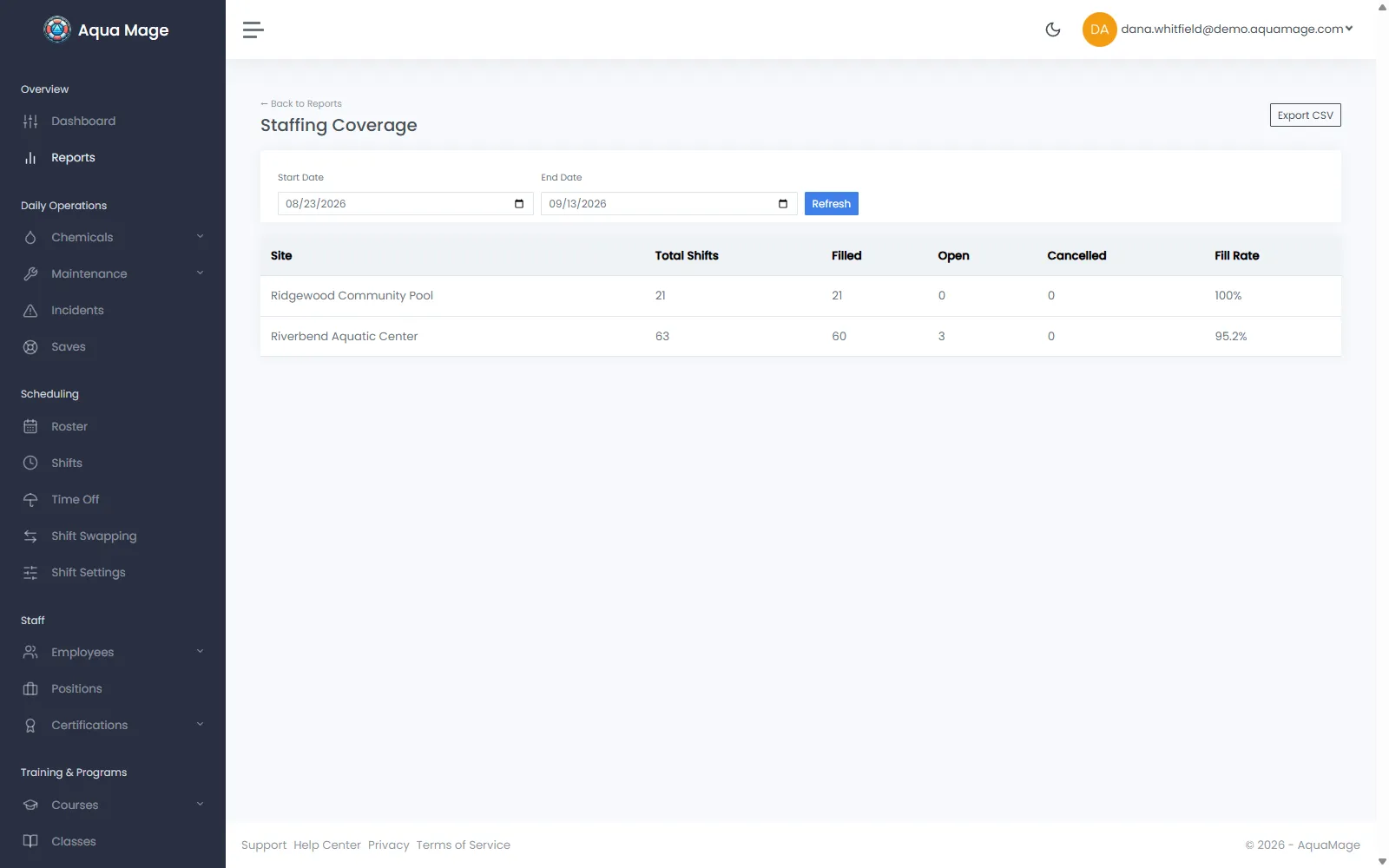
Build the week from recurring templates, then let the scheduler assign it. Open shifts go out as text messages your staff reply to, and approved time off removes people from consideration rather than just marking them unavailable.
Assignment
Stable matching — every guard gets the best shift still available to them, and no pair of guards would rather trade with each other.
Eligibility
A certification must be valid on the shift's own date, not today. Which certifications a shift requires comes from its position.
Limits
Weekly availability windows, approved time off, and a 40-hour cap. A guard can drop a held shift for a better one only if the hours still fit.
Order
Fairness first — whoever has the fewest hours so far gets first choice — then seniority by hire date.
Swaps
The system texts the covering coworker, who replies YES or NO from the lock screen. Unanswered requests expire on their own.
Cadence
Optional nightly generation, opted into per site: daily, weekly or bi-weekly, one to four weeks ahead, with auto-fill immediately after.
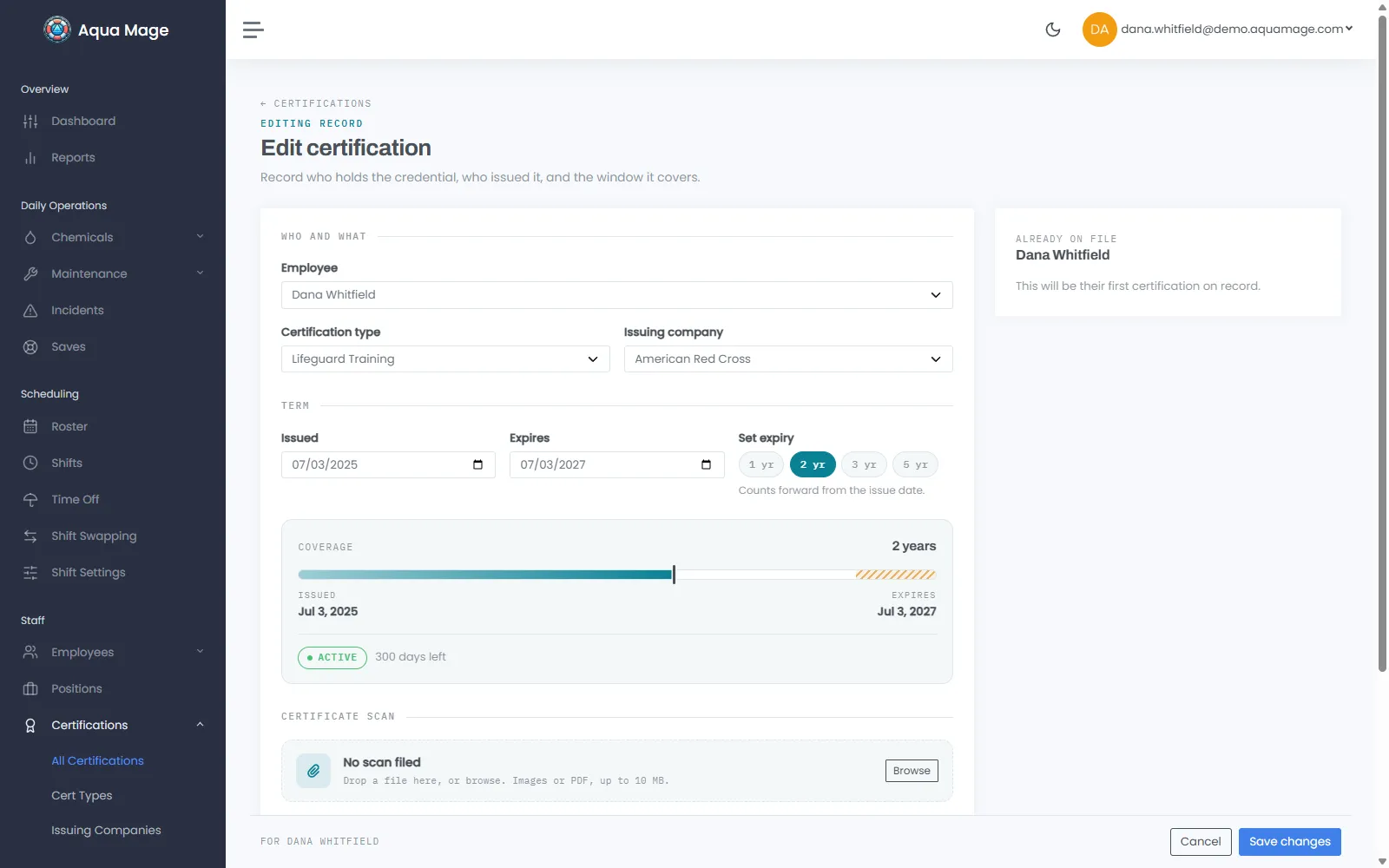
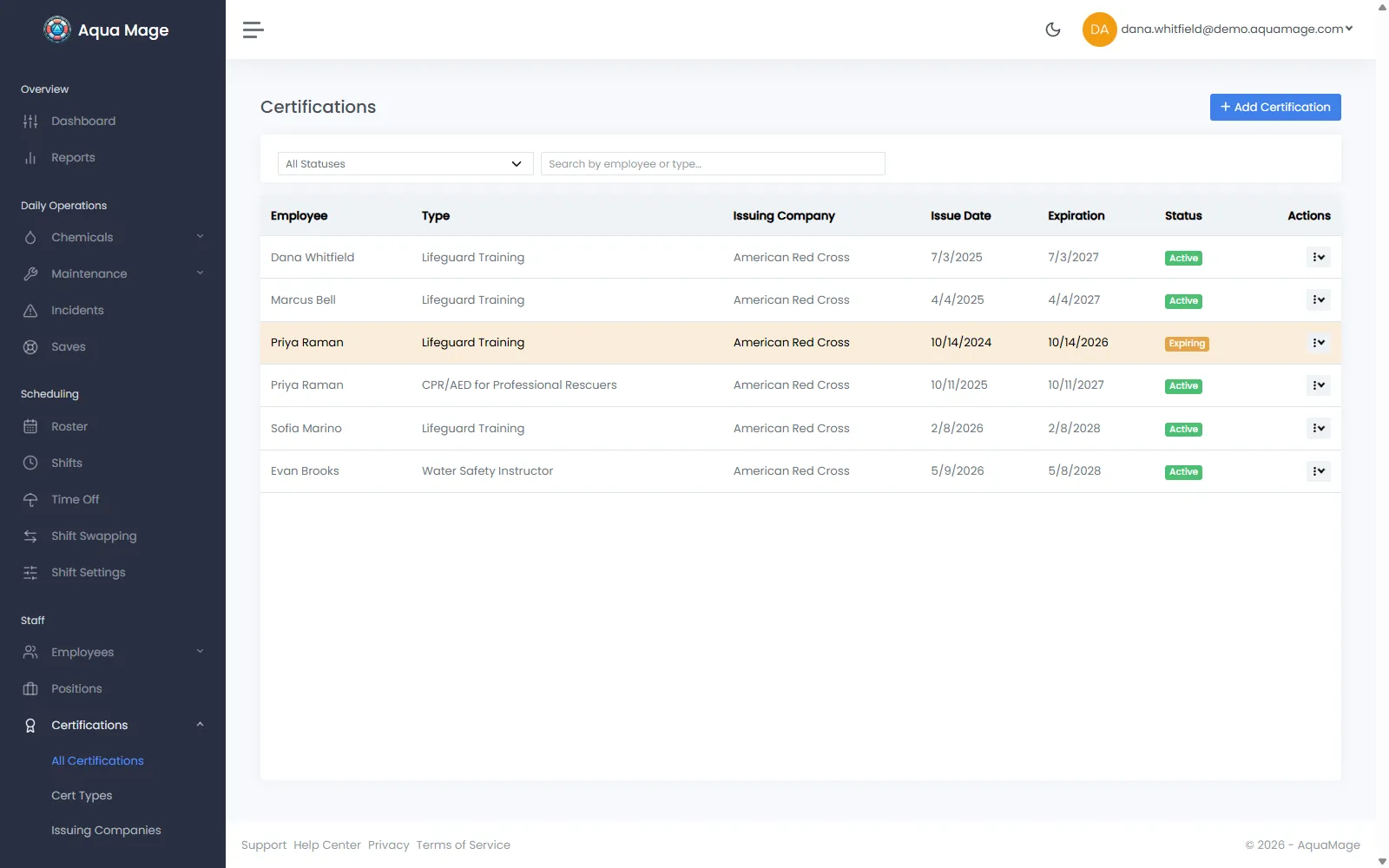
Every certification carries a type, an issuing company and an expiry date. Reminders go out well before it lapses, and the scheduler stops offering shifts the person is no longer qualified for.
Reminders
Ninety, sixty, thirty and seven days before expiry, and once more after it lapses.
Delivery
Each threshold sends once per certification, so a missed nightly run catches up without sending the same warning twice.
Enforcement
Fill will not place anyone on a shift whose position needs a certification that has lapsed by that shift's date — the warning is not the only consequence.
Reach
Reminders go to the certification holder. Managers see expiries on the certification list and in the expiration report.
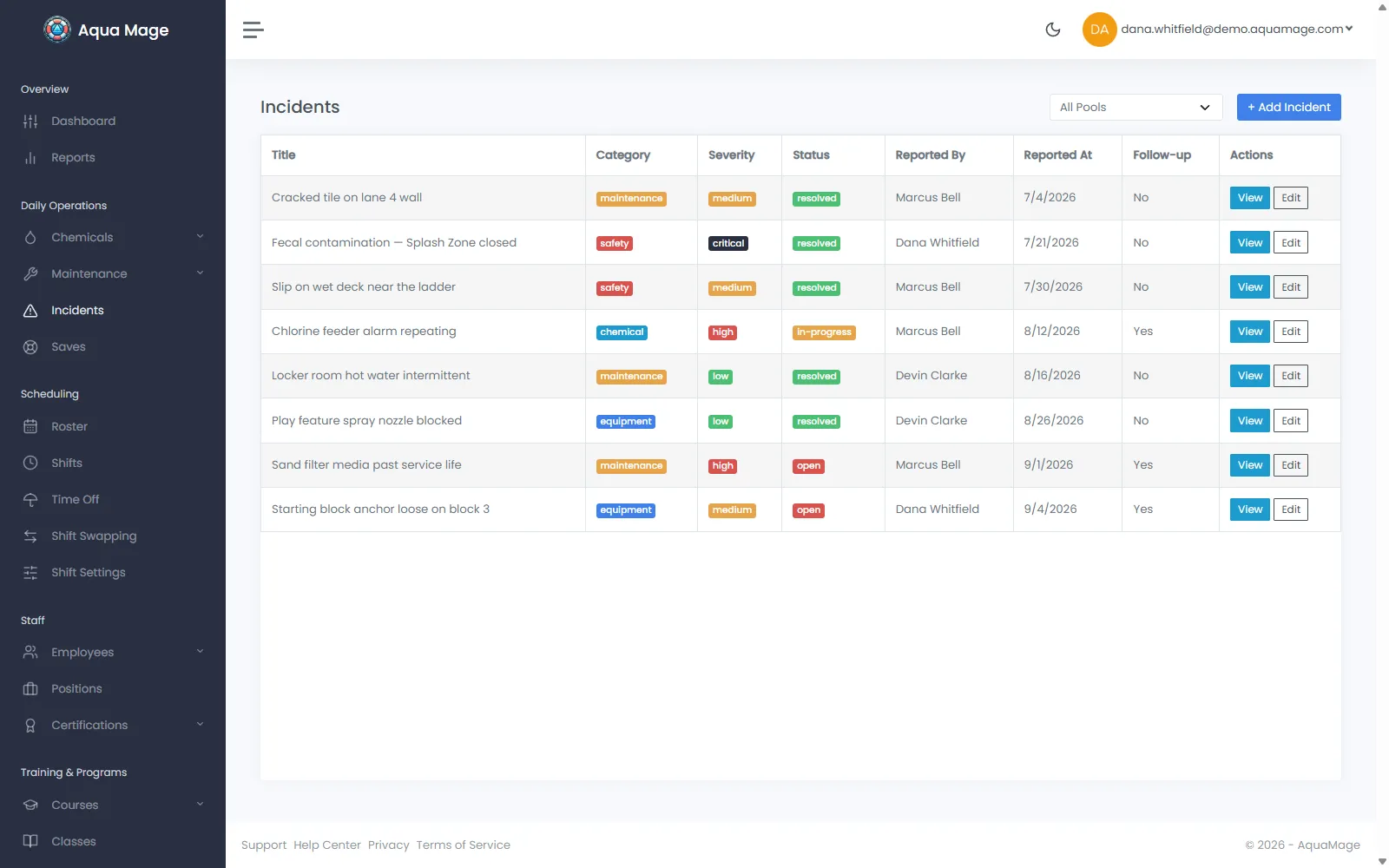
A scraped knee and a rescue are not the same paperwork, so they are not the same record. Both are filed at the pool where they happened, and both carry who is responsible for what happens next.
Incidents
Safety, maintenance, equipment, chemical or other, with severity, status, reporter, assignee, witnesses, actions taken and a follow-up date.
Rescues
A separate record: the guard, the pool and the area within it, the save performed, whether EMS was called, and whether a manager still owes a follow-up.
Separation
Distinct permission sets. Logging a cracked tile does not grant anyone access to rescue reports.
Keep that person — just stop them being the only copy. Five roles to start from, editable into whatever shape your facility actually works in, and a record of every change with a name against it.
Permissions
Around forty keys, grouped and labelled, distinguishing what someone may do to their own records from what they may do to everyone's.
Roles
Five seeded roles — admin, manager, lifeguard, instructor, other — as starting bundles you can re-cut. Built-in roles cannot be deleted.
Audit
Every change, who made it and when, searchable and newest-first. The same trail feeds the activity feed on the dashboard.
Messages
Rewrite what reminders, invites and alerts actually say. Placeholders are checked when you save, so a template can never reference a value the system does not have.
12 FTAfter hours
What runs while nobody is logged in
Six jobs, every night, for each account. Most of what is above keeps
working on the week your head guard is short-staffed and nobody opens a
laptop.
Shift generationNext week's shifts, built from your templates
MaintenanceA pending entry for every task now due
CertificationsExpiry reminders at ninety, sixty, thirty and seven days
Stock alertsA notice when a chemical drops below its minimum
Swap expiryCoverage requests nobody answered are closed out
Code expiryCertificate verification codes past their life are retired
Everything above works today, and the week's schedule now goes out by
email as well. What comes next — text alerts for schedule changes as
well as swaps, and the deck on your phone — is laid out on the
roadmap.
Feature bounties
Need something that isn't here?
You can sponsor it. A funded feature moves up the queue and still ships to
everyone on every plan when it lands — no feature tiers, no private forks.
That goes for things on the roadmap and things that aren't on it at all.
Tell us what you're after and we'll scope it honestly, including when the
answer is that it's a bad idea.
The same nine areas, six very different operations
Every facility above keeps the same records. What changes is who keeps them, on what season, and who signs off — so each page covers the version of this that matches your setup.