Pool chemical logs your inspector can read in one sitting
Each pool has a testing cadence. Each reading is a measured value at that pool, at a recorded time, by a named employee. Put the two together and the log can say what was missed, not just what was written down.
Replaces the clipboard on the pump-room wall
Chemical logs
A reading is a measured value, at one pool, at a recorded time, by a named employee. Set how many readings each pool owes per day and the dashboard carries a compliance percentage you can hand over without preparing anything first.
- Grain
- One pool, not one site. New York asks for records of each swimming pool separately, so a main pool and a wading pool keep separate logs.
- Targets
- Expected readings per chemical type, per pool, per day. That is what makes the compliance figure mean something rather than count rows.
- Inventory
- On-hand amounts with minimum stock levels and reorder dates, adjusted as shipments arrive and each change kept in history.
- Alerting
- A nightly check notifies once when a chemical falls below its minimum, then re-arms when stock recovers, so it cannot nag.
- Retention
- Twelve months stays queryable per pool and filterable by date window — not archived off where a records request cannot reach it.
From setup to the day itself
-
Set the cadence
Choose how often each chemical is tested — hourly, every two or three hours, three times a day, daily, or less often. Set it once for the account, then override it for a site or a single pool.
-
Slots follow your hours
Sub-daily cadences count open hours and add a closing reading, so a site open sixteen hours owes more readings than one open eight, and a day the site is closed owes none.
-
Log the reading
Staff record the value against its slot. The reading keeps who recorded it and when.
-
See what was missed
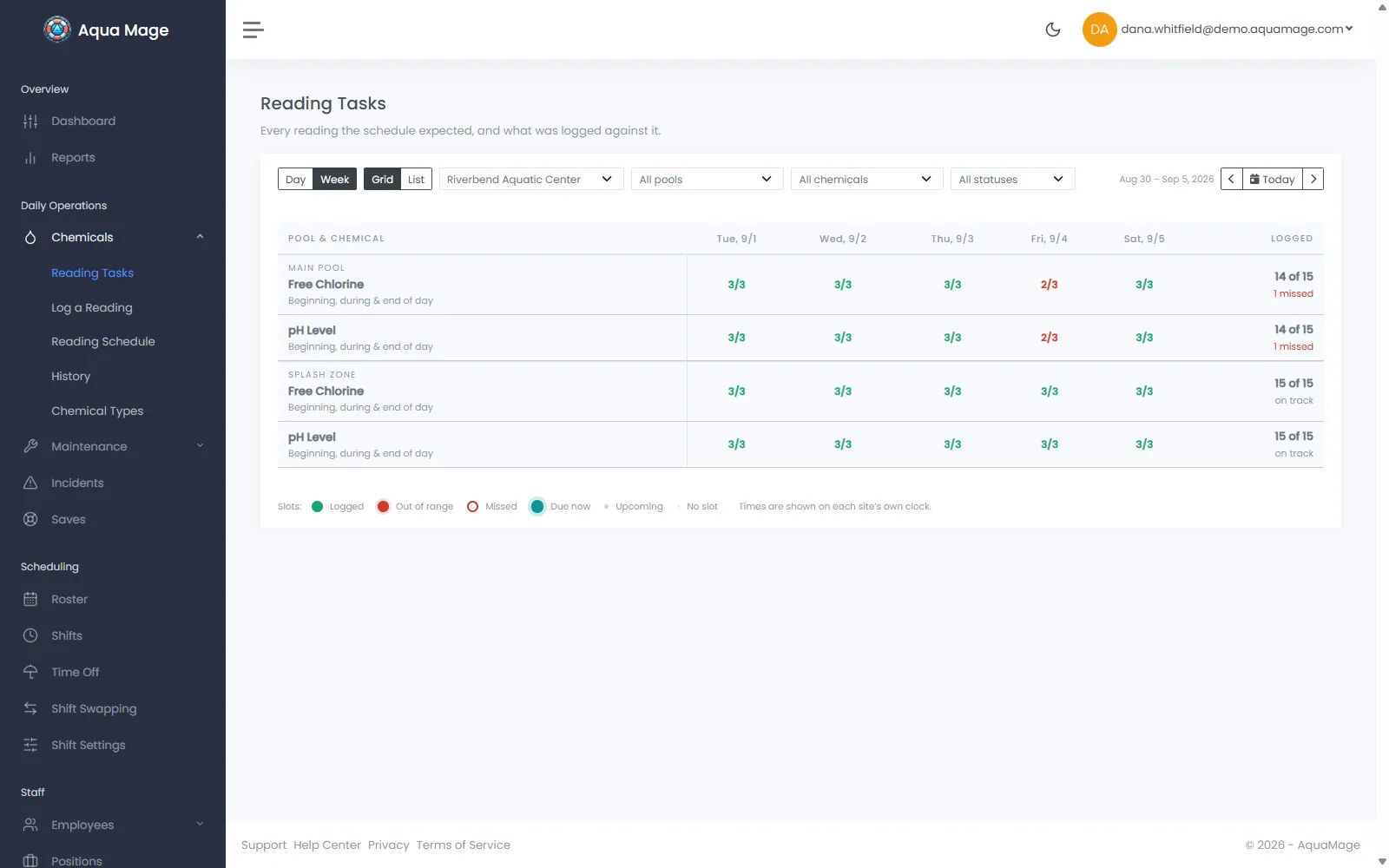
Compliance is readings logged against readings owed, per pool, per day — so a wading pool testing two chemicals is not scored against the main pool's five.
-
Keep stock ahead of the season
Each chemical on hand carries a minimum and a reorder date. Dropping below the minimum, or passing the reorder date, alerts the site's manager.
What it catches without being asked
The reading that never happened
A slot that passes without a reading shows as Missed on the reading grid, rather than as a blank line someone finds weeks later.
A value outside its range
Every reading is scored against its chemical's acceptable range — the same test on the log and in the compliance figure. An out-of-range reading can become an incident in one step, with the reading attached as evidence.
Stock that runs out mid-season
One alert when a chemical drops below its minimum or passes its reorder date. It clears once stock is back above the minimum and the reorder date is ahead again, so the next dip alerts again — no nightly nagging.
A closed day scored as a failure
Readings owed come from each site's operating hours, so a day the site is shut owes nothing and cannot drag the figure down.
What New York asks for
Treatment
Tests shall be conducted and recorded for pH and free and total chlorine or bromine residual at the beginning, during, and at the end of each swimming period.
10 NYCRR §6-1.11
In Aqua Mage: Give pH and chlorine a sub-daily cadence and each open day carries timed, attributed readings from opening through a closing reading.
Operator and operating records
Complete daily operation records shall be kept of the operation of each swimming pool on forms approved or furnished by the State Commissioner of Health. Upon completion, a copy of such records shall be maintained at the facility for 12 months.
10 NYCRR §6-1.21
In Aqua Mage: Aqua Mage keeps readings per pool, so each pool's record can be pulled up on its own.
Plain-language summary of published regulations, not legal advice. Requirements vary by facility class and are enforced by your county health department — confirm current obligations with your permit-issuing official. What New York actually requires →
Related features
Who runs it this way
01 Does this replace the state's operating record form?
02 How often should we test?
03 Can different pools have different schedules?
04 What happens when a reading is out of range?
05 Does it track chemical inventory?
Get your facility in order
Thirty days, the full platform, no credit card. Setup takes about three minutes — start with your email and we'll take it from there.
No card required · Cancel any time